
Key Points
- Self-service golden paths simplify Kubernetes by offering pre-selected, automated processes that smoothly guide developers from conception to production
- Golden paths can boost developer productivity by 40-60% by eliminating the need to manage infrastructure complexities
- Effective golden paths find the sweet spot between standardization and developer independence, offering safeguards without stifling creativity
- Research from the Platform Engineering Institute reveals that organizations with well-crafted golden paths deploy 3 times more frequently and experience 70% fewer incidents
- The most effective golden paths evolve gradually based on developer input, treating the platform as a product rather than a fixed tool
Kubernetes offers scalability, resilience, and cloud-native architecture, but its steep learning curve often leaves developers bogged down in YAML files rather than delivering business value. The answer? Self-service golden paths that turn Kubernetes from a complicated infrastructure platform into a productivity booster. SlickFinch has been leading this transformation, providing organizations with the necessary frameworks to manage Kubernetes complexity while speeding up innovation.
It’s a familiar annoyance: skilled developers waste days setting up Kubernetes resources rather than creating features that customers actually want. This situation has given rise to platform engineering and the golden path method, which is changing the way organizations approach cloud-native development.
Overview
Kubernetes has gained immense popularity in recent years, but its complexity can be daunting and even counterproductive. Self-service golden paths are a potential solution to this problem. They provide a structured but adaptable framework that enables developers to work more efficiently without compromising operational standards. By automating routine development tasks and standardizing them, companies can significantly reduce the mental burden on developers. At the same time, they can ensure that security, compliance, and operational best practices are incorporated from the beginning.
In this article, we will delve into how golden paths can change the way you interact with Kubernetes, the key elements of a successful implementation, and how to create a platform that developers will love to use. Whether you are new to Kubernetes or are looking to make an existing deployment better, the golden path method provides a solution that strikes a balance between giving developers the freedom they need and maintaining operational control.
The Challenges Developers Face with Kubernetes (And How Golden Paths Can Help)
Kubernetes has emerged as the go-to solution for container orchestration, but its capabilities are a double-edged sword. The learning process is infamously difficult, requiring developers to grasp pods, services, deployments, ingress controllers, persistent volumes, and many other ideas just to launch a basic app. This complexity takes precious time away from developers that could be spent on producing features that provide business value. Many teams say they spend 30-40% of their development time on infrastructure issues instead of application logic.
However, the issue isn’t just the steep learning curve. Even seasoned developers struggle with ongoing problems like troubleshooting, optimizing resource utilization, and staying up-to-date with the rapidly changing Kubernetes ecosystem. Each new project turns into a custom job, recreating deployment patterns and infrastructure configurations that could be standardized.
Golden paths are the solution to these challenges. They offer developers workflows that are not only curated but also opinionated. These workflows guide developers through common tasks. The need for every developer to become an expert in Kubernetes is eliminated with golden paths. They hide the underlying complexity and provide sensible defaults. They also automate repetitive tasks. The outcome of all this is that developer productivity is greatly improved. Deployments also become consistent and reliable.
What Are Kubernetes’ Self-Service Golden Paths?
Self-service golden paths are predefined, automated workflows that help developers take their code from development to production without needing to be infrastructure experts. They are more than just documentation or guidelines—they are interactive, programmatic experiences that combine templates, automation, and built-in best practices into a streamlined developer journey. The “self-service” part is key: developers can move through the entire lifecycle without having to file tickets or wait for operations teams to do things for them.
Picture a developer who is able to create a new microservice with a straightforward command or interaction with a user interface. This action automatically provides the necessary Kubernetes resources, sets up CI/CD pipelines, configures monitoring, and sets security policies. And all of this is in line with the standards of the organization. This removes the mental load of making decisions about infrastructure and guarantees consistent implementations across teams. The developer can concentrate on business logic while the golden path takes care of the operational framework.
“The golden path trades the extreme developer autonomy and tool sprawl that marked the 2010s for the convenience of opinionated workflows for common processes, standardized permissions and greater visibility across organizations.” — Platform Engineering Institute
Importantly, golden paths aren’t rigid prescriptions that force all applications into the same mold. They provide sensible defaults that work for most cases while allowing for customization where necessary. The best implementations support “paved roads” for common scenarios while allowing developers to venture “off-road” when unique requirements demand it—but with clear signposts indicating when they’re deviating from proven patterns. For more insights, explore the best practices in platform engineering.
From Raw Kubernetes to Developer-Friendly Platforms: A Natural Progression
Golden paths are a natural result of Kubernetes being increasingly adopted by organizations. Initially, Kubernetes was adopted by companies for its superior orchestration capabilities, often requiring all developers to become experts in container orchestration. However, as teams grew, this approach became unmanageable due to the overwhelming amount of information to process.
Following this, the time came for platform teams to create custom internal tools, often leading to disjointed experiences and documentation that couldn’t keep up with the speed of changes. Despite the good intentions, these attempts often fell short due to inconsistent user experiences and difficulties with maintenance. Companies found that simply documenting the best practices for Kubernetes wasn’t enough—they needed to incorporate these practices into reusable, automated workflows.
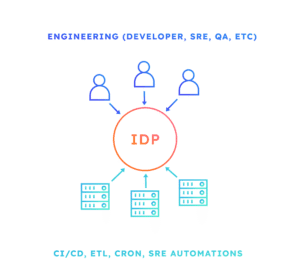
The golden path approach of today reflects a more advanced comprehension of the developer experience. Contemporary applications utilize Internal Developer Platforms (IDPs) that offer uniform interfaces across environments, with the complexity of Kubernetes concealed behind user-friendly APIs and user interfaces. The emphasis has transitioned from “educating everyone on Kubernetes” to “rendering Kubernetes unseen” for the majority of daily development activities.
Key Elements of Successful Golden Paths
Even though the implementation methods may differ, the most effective golden paths have shared characteristics that provide a balance between standardization and flexibility. The use of platform abstraction and agnostic design guarantees that developers work with uniform interfaces, regardless of the underlying infrastructure, be it EKS, GKE, AKS, or on-premises Kubernetes. This abstraction protects teams from unnecessary complexity while preserving portability.
Security Guidelines That Don’t Hinder Development
Security continues to be one of the most difficult parts of adopting Kubernetes, with many companies finding it hard to maintain developer speed while also ensuring appropriate security measures. Successful golden paths incorporate security smoothly through pre-approved guidelines, automated scans, and built-in compliance checks. Instead of security acting as a barrier that slows down deployment, it becomes an integral part of the development process that identifies problems early on without interrupting workflow.
A Self-Service Infrastructure That’s Ready to Go
The ultimate goal of a successful golden path is to have an infrastructure that developers can set up without the need for operational intervention. This self-service feature allows teams to create environments, set up networking, and allocate resources through simple interfaces or APIs. Behind these interfaces, the platform takes care of the complicated orchestration of Kubernetes resources, ensuring consistency and significantly reducing wait times. By removing the need for infrastructure teams to handle routine tasks, organizations can speed up development cycles while still maintaining operational standards.
Golden Paths in Practice: Real-World Case Studies
While understanding the theory is important, seeing golden paths at work in real production environments gives concrete proof of their effectiveness. Top tech companies have led the way in finding the right balance between standardization and flexibility, often resulting in significant increases in developer productivity and operational efficiency. These real-world examples provide key insights for any organization, no matter where they are in their Kubernetes journey, showing both the technical elements and the necessary cultural changes for a successful rollout.
Spotify’s Backstage: Simplifying Kubernetes for Developers
Spotify’s Backstage has quickly become a leading open-source developer portal, providing a central platform that makes Kubernetes accessible for developers at any level of experience. Backstage eliminates the need for every developer to become an expert in kubectl commands and YAML configurations, instead offering templates and plugins that simplify complexity and ensure consistency across hundreds of microservices.
- Software templates provide standardized starting points for new services, automatically configuring CI/CD, monitoring, and security scanning
- The Kubernetes plugin offers simplified visualization of deployments without requiring CLI expertise
- TechDocs integration ensures documentation lives alongside code, reducing the knowledge gap for new team members
- Scoring system encourages adherence to best practices through visibility and friendly competition
Spotify engineers report that Backstage has reduced the time to deploy new microservices from days to minutes, with consistent implementations across teams. The platform continues to evolve based on developer feedback, demonstrating the iterative approach essential for successful golden paths. As Spotify’s engineering team has shared, “Backstage isn’t just a tool—it’s a cultural transformation that places developer experience at the center of our technical strategy.”
Backstage has been so successful that it’s been adopted by the Cloud Native Computing Foundation (CNCF) and implemented by companies like Expedia, American Airlines, and Netflix. Its plugin architecture lets organizations tailor the platform to their specific needs while still benefiting from the shared innovation of the community.
Netflix’s Platform for Developer Experience
Netflix has been a trailblazer in many of the practices that are now linked with cloud-native development, including a refined approach to the experience of developers. Their internal platform removes the complexity of Kubernetes by using opinionated tools that represent the philosophy of the golden path. Netflix’s engineers engage with concepts that are more high-level and that are in line with their business domain, instead of details related to low-level infrastructure.
Netflix’s strategy is especially successful because of the way they’ve struck a balance between standardization and innovation. Their platform provides obvious default routes that are suitable for the majority of use cases, but also includes escape hatches for teams with specific needs. This balanced strategy guarantees that standard applications reap the benefits of operational consistency while still leaving room for experimentation when the business requires it. The outcome is a development environment that keeps up a high pace without giving up reliability or security, aligning with platform engineering best practices.
Creating Your First Golden Path: A Step-by-Step Guide
- Begin with a single, impactful application workflow rather than trying to change everything at once
- Concentrate on developer issues and daily annoyances rather than architectural perfection
- Before implementing technical solutions, reach an agreement between development and operations teams
- Measure metrics before and after to show value and gain support for expansion
Creating an effective golden path is more about the process than the technology. Start by mapping the current developer journey and identifying friction points where teams waste time or make inconsistent decisions. These issues often include environment provisioning, dependency management, and deployment processes. Documenting these challenges provides a roadmap for improvement and helps prioritize which aspects of the developer experience to address first.
For the golden path to be successful, collaboration between different teams is crucial. The platform teams need to work hand in hand with developers to understand what they need. On the other hand, operations and security stakeholders need to make sure that guardrails reflect the requirements of the organization. This approach of working together helps to avoid the common mistake of creating solutions that seem good on paper but do not meet the needs of developers in the real world. Regular feedback sessions and usability testing should be used to make improvements over time.
When it comes to selecting technology, the strategy should be the leader, not the follower. A common mistake many organizations make is to start with the tools before considering the outcomes. Rather, you should first outline what you want the developer experience to be like, then assess which technologies can provide that experience. This could involve internal developer portals such as Backstage, GitOps tools like Flux or ArgoCD, or platform abstraction layers that make Kubernetes interactions easier. The ideal solution will probably merge several tools into a seamless experience that is customized to your organization’s unique requirements.
Start with the Basics: The Essential Golden Path
Instead of trying to construct a full-fledged platform right away, concentrate on establishing a basic golden path that deals with one key workflow. This could be as easy as standardizing the way new microservices are started or making the process of deploying to a development environment more efficient. By providing real value in a short amount of time, you gain trust and create a sense of urgency for wider acceptance. Early successes also offer chances to learn, which can help shape future iterations.
Even with automated workflows, documentation is still essential. Your golden path should include clear explanations of not just how processes work, but why they’re designed that way. This context helps developers understand the reasoning behind standardized approaches and reduces the temptation to work around them. The most effective documentation combines technical details with architectural principles, creating a shared understanding across teams.
Tools That Simplify the Implementation of Golden Paths
Although a golden path is mainly a method rather than a specific tech stack, a number of tools have been developed to make implementation easier. Backstage offers a complete developer portal with customizable templates and plugins. Crossplane allows for declarative, Kubernetes-native infrastructure provisioning. Kustomize and Helm make application packaging easier, while policy engines like OPA Gatekeeper and Kyverno provide guardrails. For organizations that are just starting out, these tools provide production-tested components that can greatly speed up the development of golden paths.
Mistakes to Avoid
Improving the developer experience is a journey full of well-intentioned missteps. One common mistake is building systems that are too rigid and don’t allow for exceptions. Golden paths should offer clear defaults but also have a way out for valid edge cases. Another common mistake is building platforms without enough developer input. This can lead to solutions that don’t solve real problems or that create new problems in the name of standardization.
One of the most common pitfalls is treating golden paths as a one-off project rather than a continuous product. Successful platforms are always changing and evolving based on how they are used, feedback from developers, and the changing needs of the organization. By setting up ways to give and receive feedback and dedicating resources to continuous improvement, you can make sure that your golden path stays relevant and valuable as both technology and your business continue to evolve.
Quantifying Success: How to Determine if Your Golden Path is Effective
Creating a golden path is a significant commitment, so it’s crucial to objectively assess its effect. Key performance indicators should include how often deployments occur, how long changes take to implement, and how much time is spent on infrastructure tasks compared to feature development. Developer satisfaction surveys offer qualitative feedback that complements these quantitative measures. Successful platforms usually demonstrate significant improvements in both areas: organizations often report a 50-70% decrease in the time it takes to go to production and substantial increases in developer satisfaction scores. These measurements not only confirm the effectiveness of the approach, but also highlight areas for ongoing improvement as your golden path evolves.
Important Metrics for Developer Productivity
When it comes to assessing the effectiveness of your golden path implementation, you need to concentrate on metrics that accurately represent the developer experience and the results of the business. The DORA metrics (frequency of deployment, lead time for changes, time to restore service, and change failure rate) provide a strong basis for measuring improvements. Organizations that implement golden paths typically experience a 200-300% increase in deployment frequency and a 40-60% reduction in lead time for changes. These improvements have a direct impact on business agility, enabling a quicker response to changes in the market and customer needs.
In addition to these technical measurements, keep an eye on how much time developers are spending on infrastructure tasks compared to feature development. Before the introduction of golden paths, many teams found that 30-40% of their time was spent dealing with deployment and infrastructure issues. Successful golden paths can reduce this to 10-15%, allowing developers to concentrate on business logic. The success of the golden paths can also be measured by increased developer satisfaction scores and shorter onboarding times for new team members. Some organisations have found that new developers are able to make their first production change within days, rather than weeks.
Striking a Balance Between Standardization and Developer Autonomy
The trickiest part of golden paths is finding the right mix of standardization and flexibility. Over-standardization can hinder innovation and lead to frustration, while under-standardization can compromise the advantages of consistency. Successful implementations draw clear lines: essential operational matters like security, observability, and deployment pipelines adhere to standardized patterns, but application architecture and business logic are left to the discretion of the developer. This strategy guarantees operational efficiency without imposing on developers how they should address business issues.
Another useful approach is to offer varying degrees of flexibility based on the importance of the application and the expertise of the team. New projects or teams with less experience can benefit from more rigid paths with sensible defaults for every decision. On the other hand, mature products or specialized teams may need more flexibility. Some organizations implement a “golden path tax”, where deviations require additional documentation and ownership of the resulting operational complexity. This approach acknowledges that standardization is mainly there to reduce cognitive load, so exceptions should be carefully considered rather than prohibited.
The Evolution of Golden Paths
As Kubernetes and cloud-native technologies continue to grow and evolve, golden paths will shift from being unique solutions to becoming a standard practice. We’re beginning to see a convergence of platform engineering frameworks around the concept of developer self-service, with a growing emphasis on “platforms as products” that adapt to the needs of the developer. Future golden paths will likely include AI-assisted tools that offer contextual guidance, automatically identify deviations from best practices, and suggest optimizations that are specifically tailored to certain application patterns. The line between development and operations will continue to become less distinct, with golden paths acting as the bridge that allows for a true DevOps culture without the need for everyone to become an expert in all areas.
Common Questions
As golden paths become more common, both technical teams and business stakeholders often have similar questions. These common questions address the most frequent concerns about when it will be implemented, how it will affect the structure of the organization, and what technical considerations need to be made. This gives a realistic idea of what to expect and practical advice for organizations at different points in their Kubernetes journey.
What is the timeline for setting up a Kubernetes Golden Path?
Setting up a complete golden path usually takes between 3 and 6 months for the initial functionalities, with ongoing enhancements after that. The timeline varies greatly depending on where you start and how much you plan to cover. Organizations that already have Kubernetes knowledge and a clear platform strategy can deliver initial value in just 6-8 weeks by concentrating on workflows that have a high impact. Those who are starting from nothing or have a lot of technical debt may need more time to lay the groundwork.
Instead of trying to construct everything simultaneously, successful deployments use a step-by-step method. Begin with a single, valuable path that resolves a major developer issue, collect feedback, and gradually grow. This strategy provides quicker value over time and allows the platform to develop based on real usage rather than hypothetical needs. Most companies discover that the golden path becomes more sophisticated over time as they gain a better understanding of developer needs and operational requirements.
Can Golden Paths be used for both monoliths and microservices?
Indeed, golden paths can be used for both monolithic and microservice architectures, but the implementation details are different. For monoliths, the path focuses on deployment pipelines, environment management, and operational issues, while microservice implementations typically include additional components for service discovery, inter-service communication, and distributed system observability. The underlying principle is the same: reducing cognitive load by providing standardized, automated workflows for common development tasks.
Who should be in charge of the Golden Path in my company?
The most successful golden paths are managed by devoted platform engineering groups that include members from development, operations, and security. This diverse makeup guarantees that the platform meets the needs of the entire company rather than just one viewpoint. The platform group should operate as if it were a product, considering developers as clients and continuously enhancing the platform based on usage data and feedback.
It doesn’t matter where the platform team is located in the organization, golden paths need executive sponsorship to secure the necessary resources and break down any territorial barriers. Many organizations see platform engineering as a strategic capability that boosts developer productivity and operational excellence, rather than just a cost center or infrastructure function. This viewpoint helps to secure the necessary investment and organizational alignment for long-term success.
Is it possible to create a Golden Path without a team of dedicated platform engineers?
Even though having a team of dedicated platform engineers can speed up the implementation process and guarantee continuous evolution, it is possible for organizations to embark on their golden path journey without a fully staffed platform team. The first step would be to identify current team members who possess technical skills and have a strong interest in the developer experience. Assign them to work on platform development for a certain amount of time, focusing on making improvements that have a high impact and can demonstrate value. Once the benefits of this approach start to become clear, this initial success often provides a justification for dedicating resources to it.
What are the ways Golden Paths can manage multi-cloud deployments?
|
Method |
Advantages |
Disadvantages |
Best Suited For |
|---|---|---|---|
|
Paths Specific to Each Cloud |
Utilizes native services, Performance is optimized |
Effort is duplicated, Potential for vendor lock-in |
Companies that are committed to specific cloud providers |
|
Layer of Abstraction |
Developer experience is consistent, Migration is easier |
Potential limitations on features, More complexity |
Companies that need cloud portability |
|
Hybrid Method |
Standardization is balanced with optimization, Adoption is progressive |
Design needs to be careful, Implementation is more complex |
Most companies that need multi-cloud |
Golden paths face unique challenges with multi-cloud deployments, and it requires careful thought on how much to standardize across environments versus using capabilities specific to each cloud. The most successful methods implement a consistent interface for developers while allowing for implementations specific to each cloud behind the scenes. This method protects developers from unnecessary complexity while making sure each platform’s capabilities are used optimally.
With the help of tools like Crossplane and Terraform, you can create abstraction layers that maintain consistency across different cloud providers without having to sacrifice functionality. You have to determine which aspects need to be standardized for the sake of developer productivity (like application deployment workflows), and which ones can vary based on the infrastructure provider (like specific storage implementations). This balanced approach gives you a consistent developer experience without the limitations of lowest-common-denominator solutions.
When starting to build multi-cloud golden paths, organizations should focus on the essential workflows that stay the same across different environments. These include service scaffolding, CI/CD pipelines, and observability. After these foundations are set up, they can be expanded to include optimizations specific to each cloud, but only if these optimizations offer significant advantages. This step-by-step method lets teams deliver value quickly and continue to work towards a more comprehensive solution.
Security is a crucial aspect, especially in multi-cloud environments where different providers have different control implementations. Golden paths can manage this complexity by introducing a consistent security model that aligns with provider-specific implementations. This ensures that applications adhere to the organization’s security requirements, no matter where they are deployed. This method significantly reduces the mental burden on development teams while maintaining suitable security controls.
At the end of the day, the most successful multi-cloud golden paths put the developer experience first, but also take into account the realities of infrastructure. Instead of trying to mask all the differences between providers, they concentrate on simplifying complexity that doesn’t bring value, while giving clear instructions when knowing specifics about the cloud is truly helpful. This practical method provides the benefits of standardization in terms of productivity, without imposing unnecessary restrictions.